
Sculpture
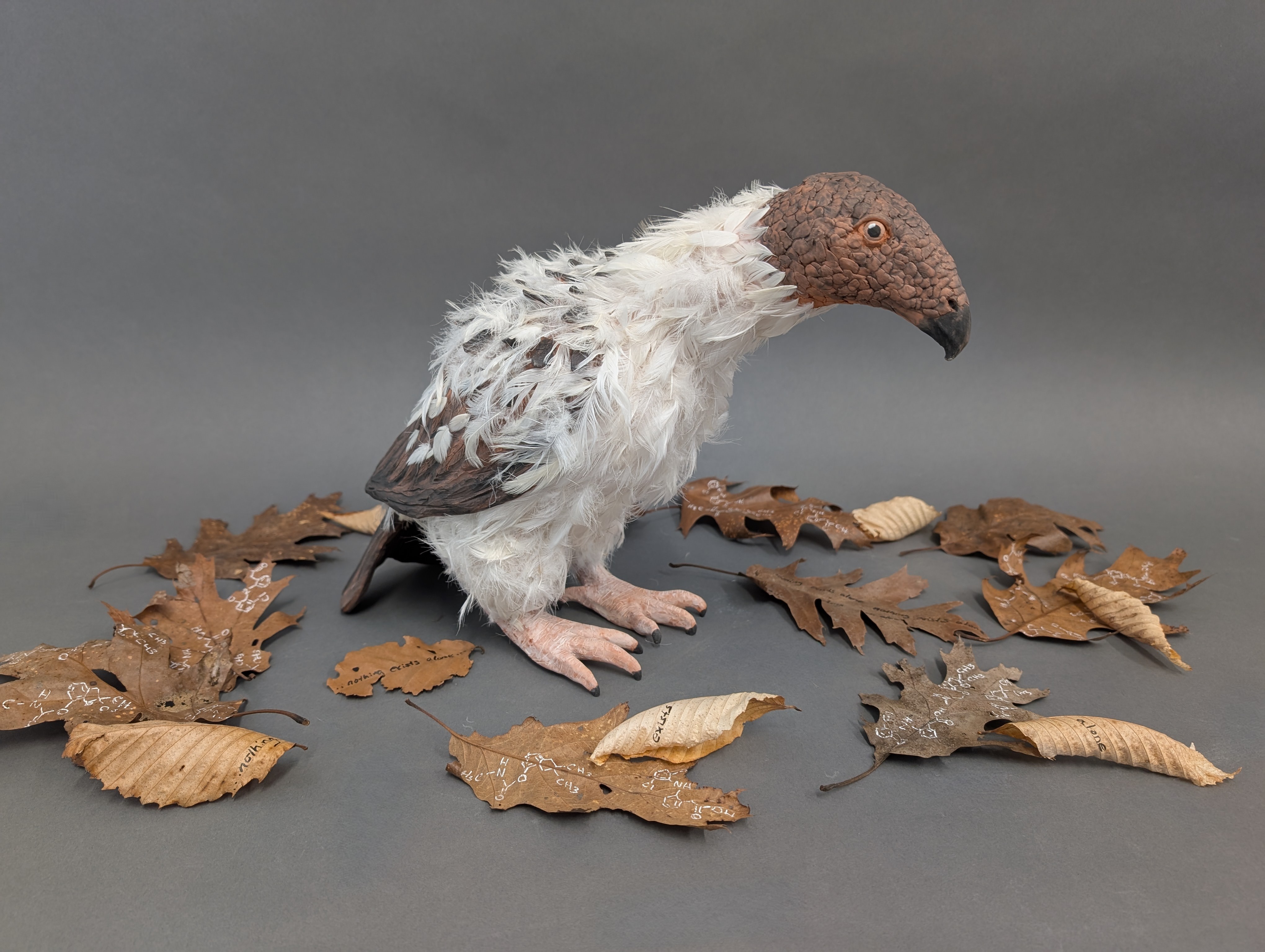
This piece features a turkey vulture chick and is titled “Nothing Exists Alone”. It speaks to the presence of persistent chemicals in the environment and their impact on non-human species. Turkey vultures, like other carrion-eating birds, are especially vulnerable to such toxins and often feed contaminated meat to their young. The title of this work is drawn from a quote by Rachel Carson — “In nature, nothing exists alone” — from her groundbreaking book Silent Spring, which raised public awareness about the harmful effects of pesticides on birds.
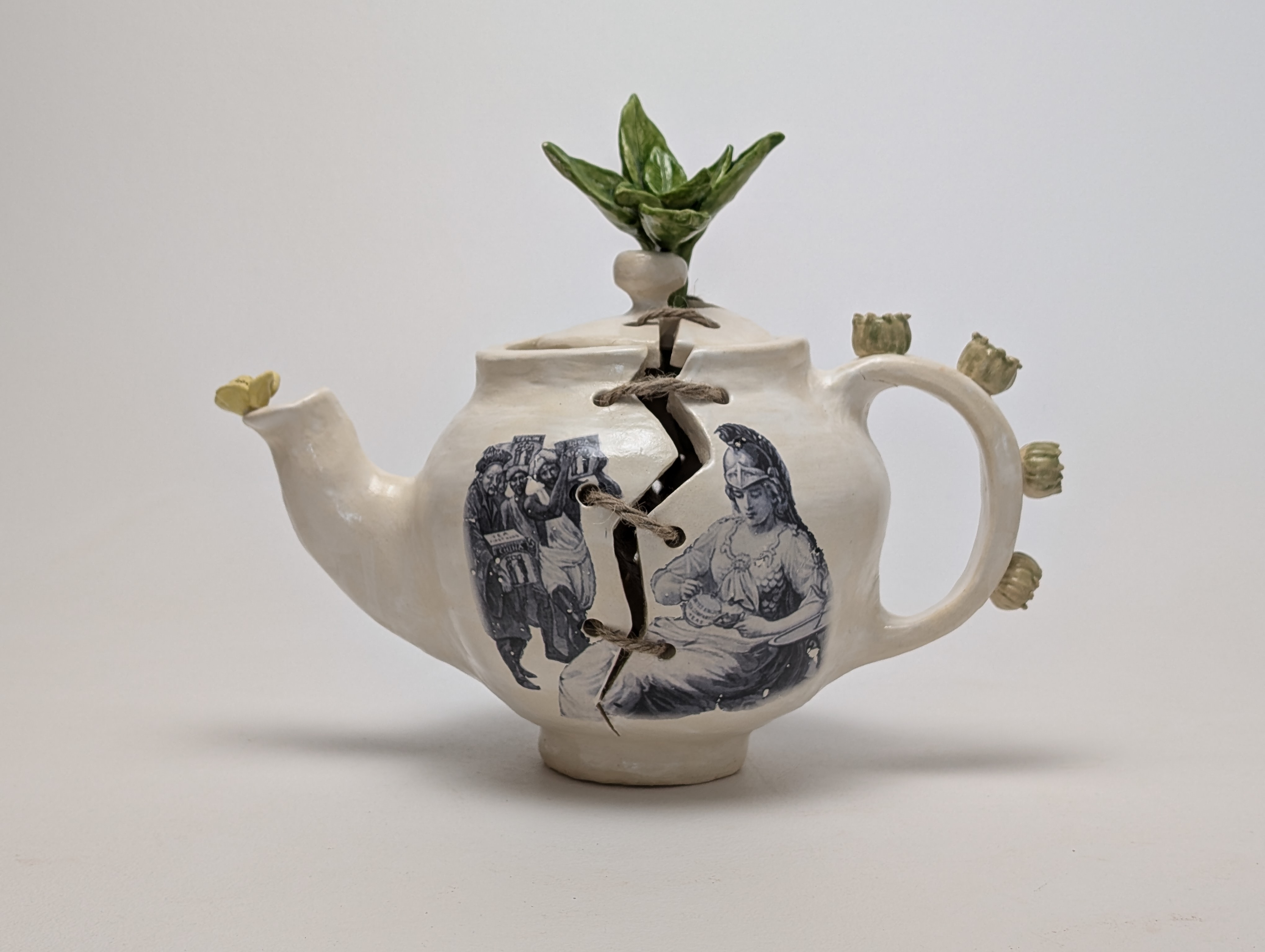
Chosen Plant references old Victorian tea advertisements, the colonial history of tea, and the sustainability issues caused by tea production. The Chosen Plant contemplates jute as crop that is heralded for sustainability and is potentially antithetical to tea production. In the piece, the jute stem is growing out of the pot and breaking the cycle of production and consumption. The jute flower and buds obstruct the pouring. The jute rope is a symbol of holding the land together.
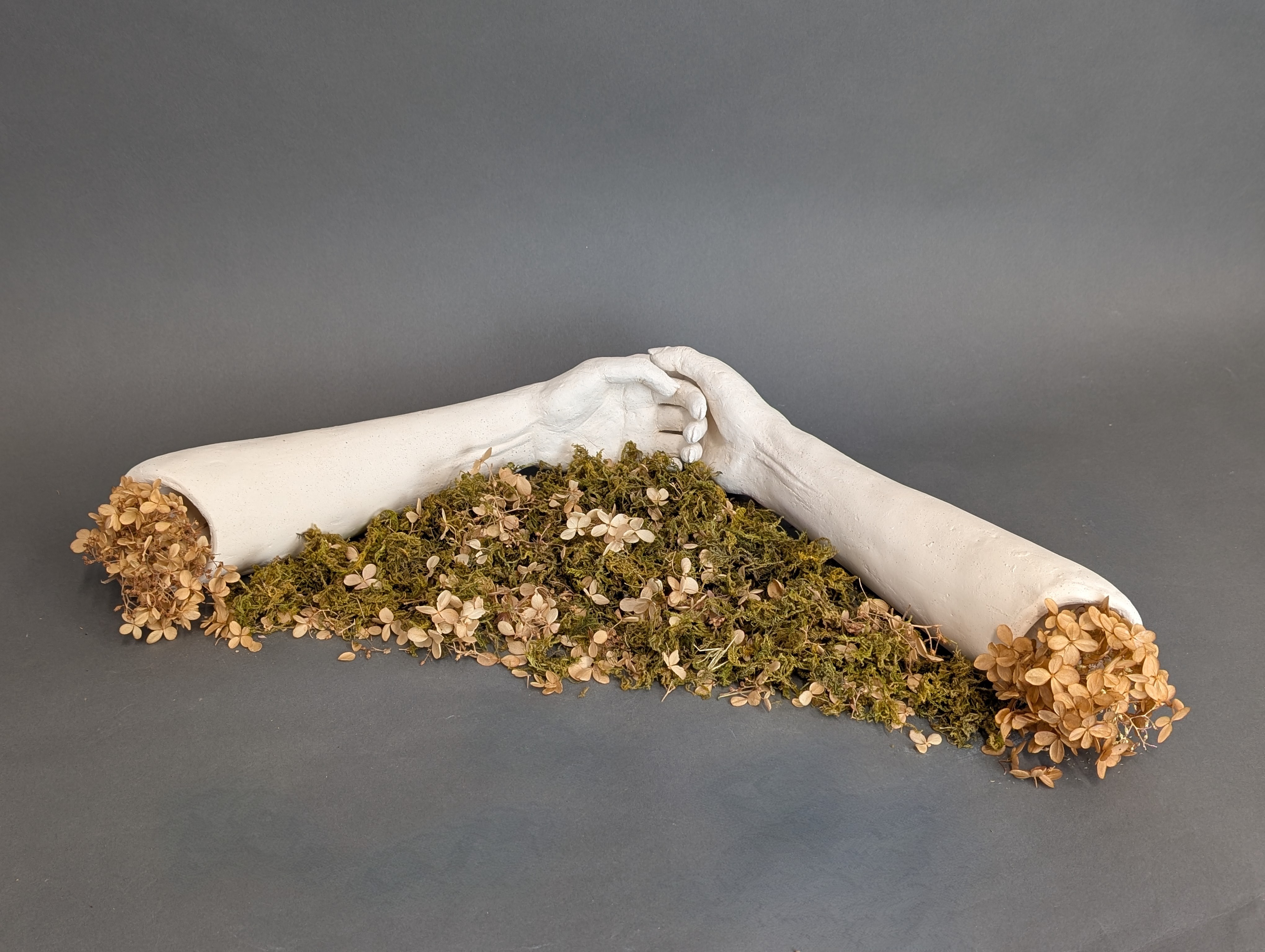
ceramic, moss, dried hydrangea flowers
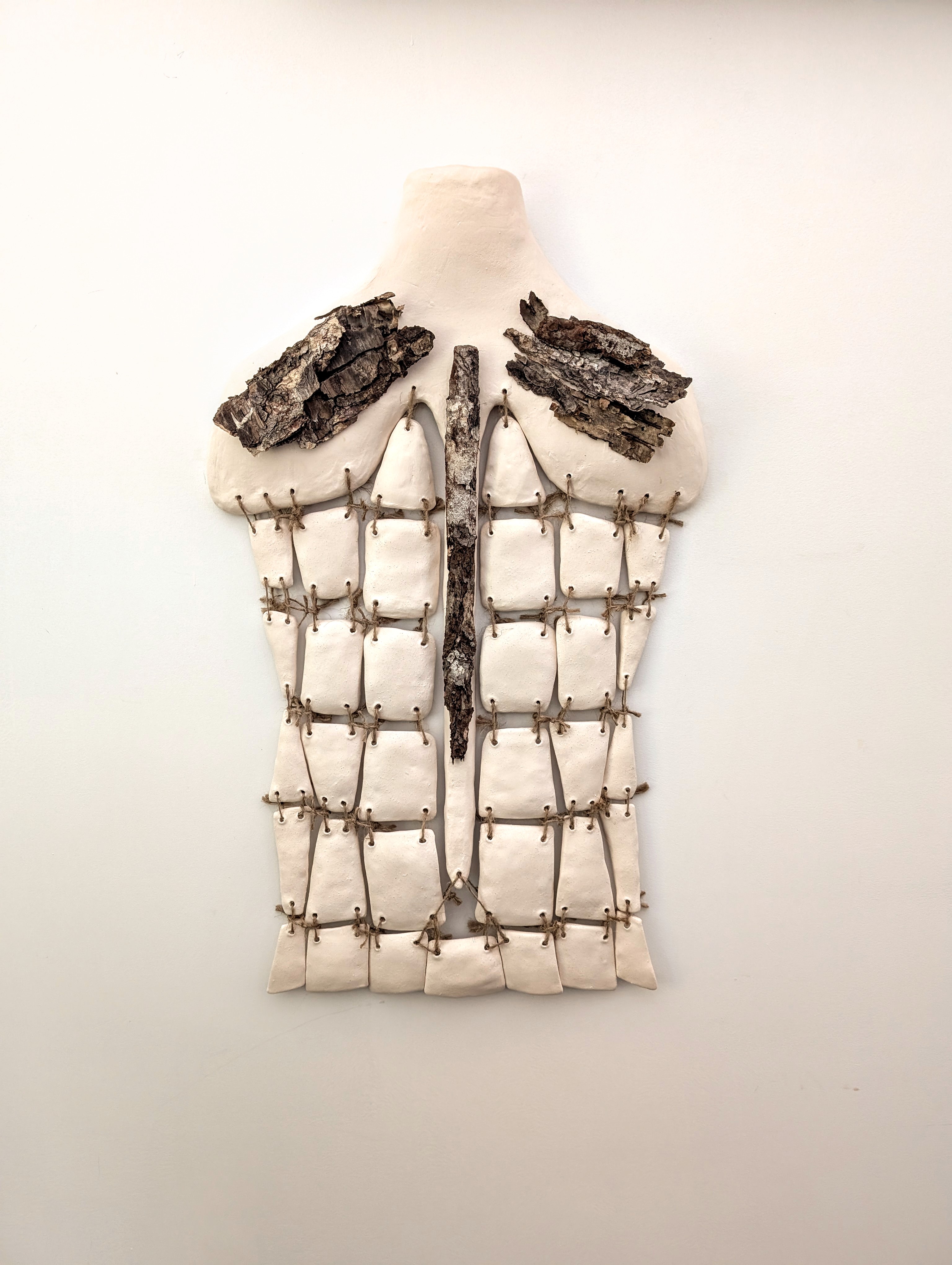
ceramic, jute, bark
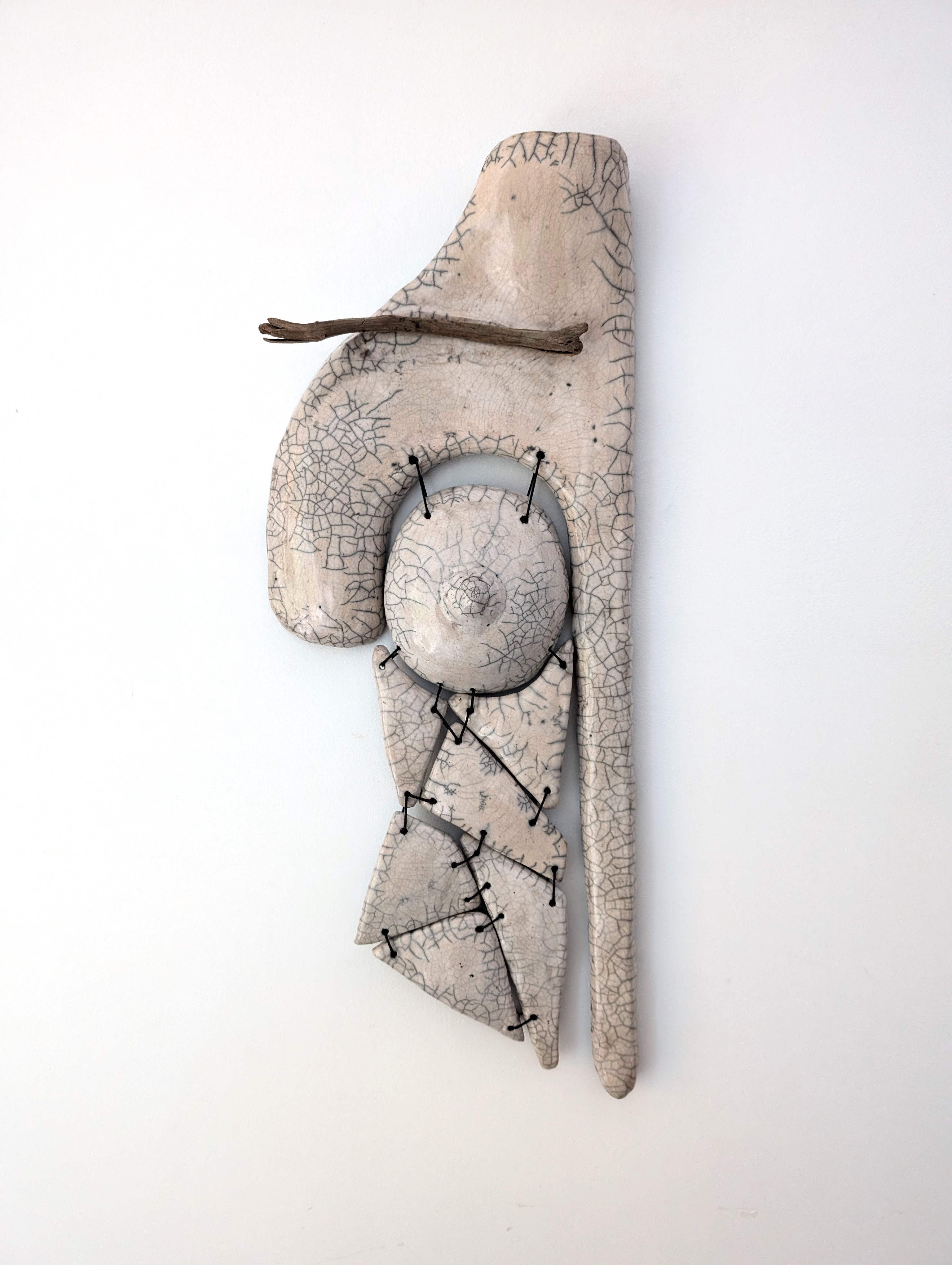
raku-fired ceramic, waxed rope, driftwood
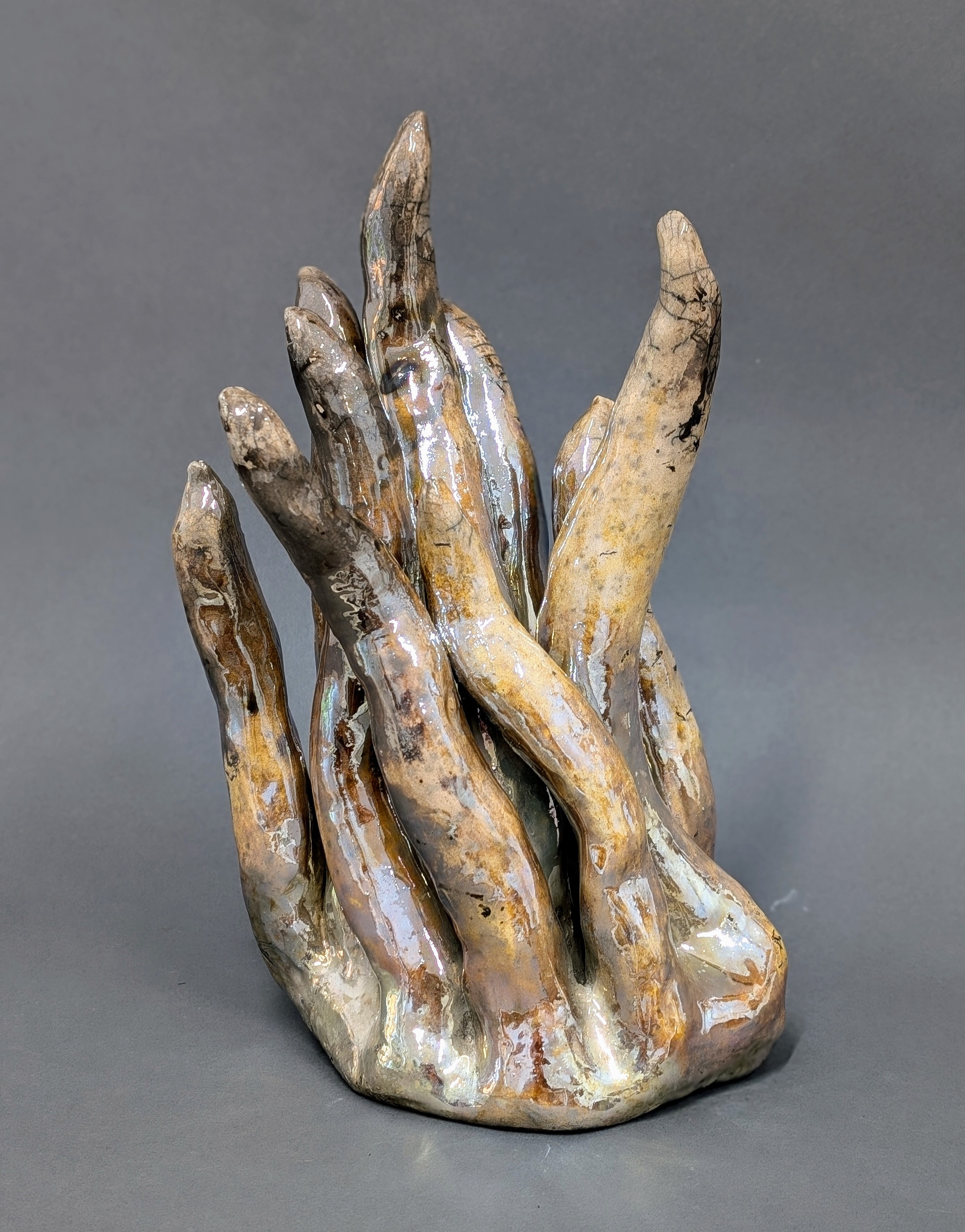
raku-fired ceramic
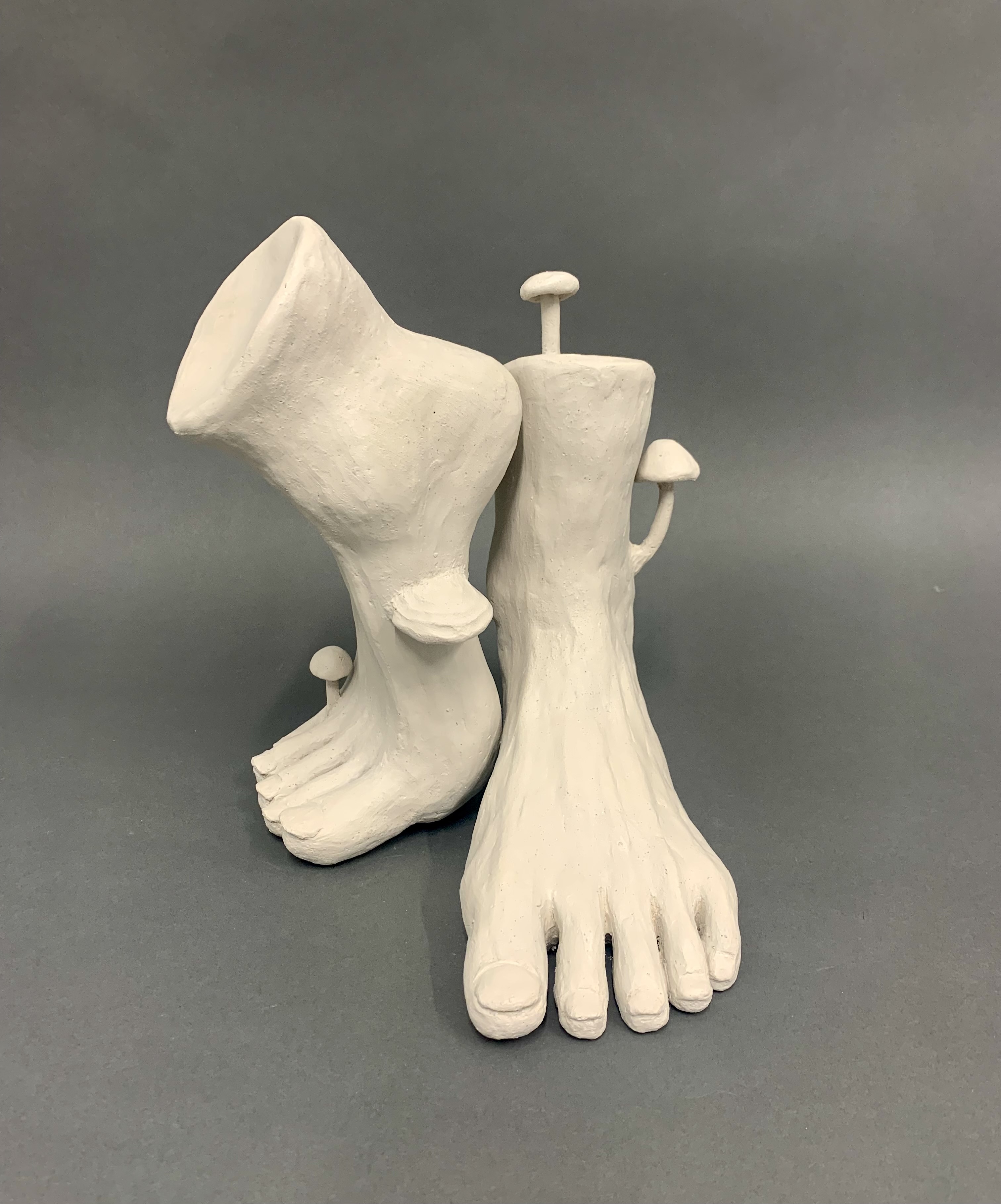
ceramic
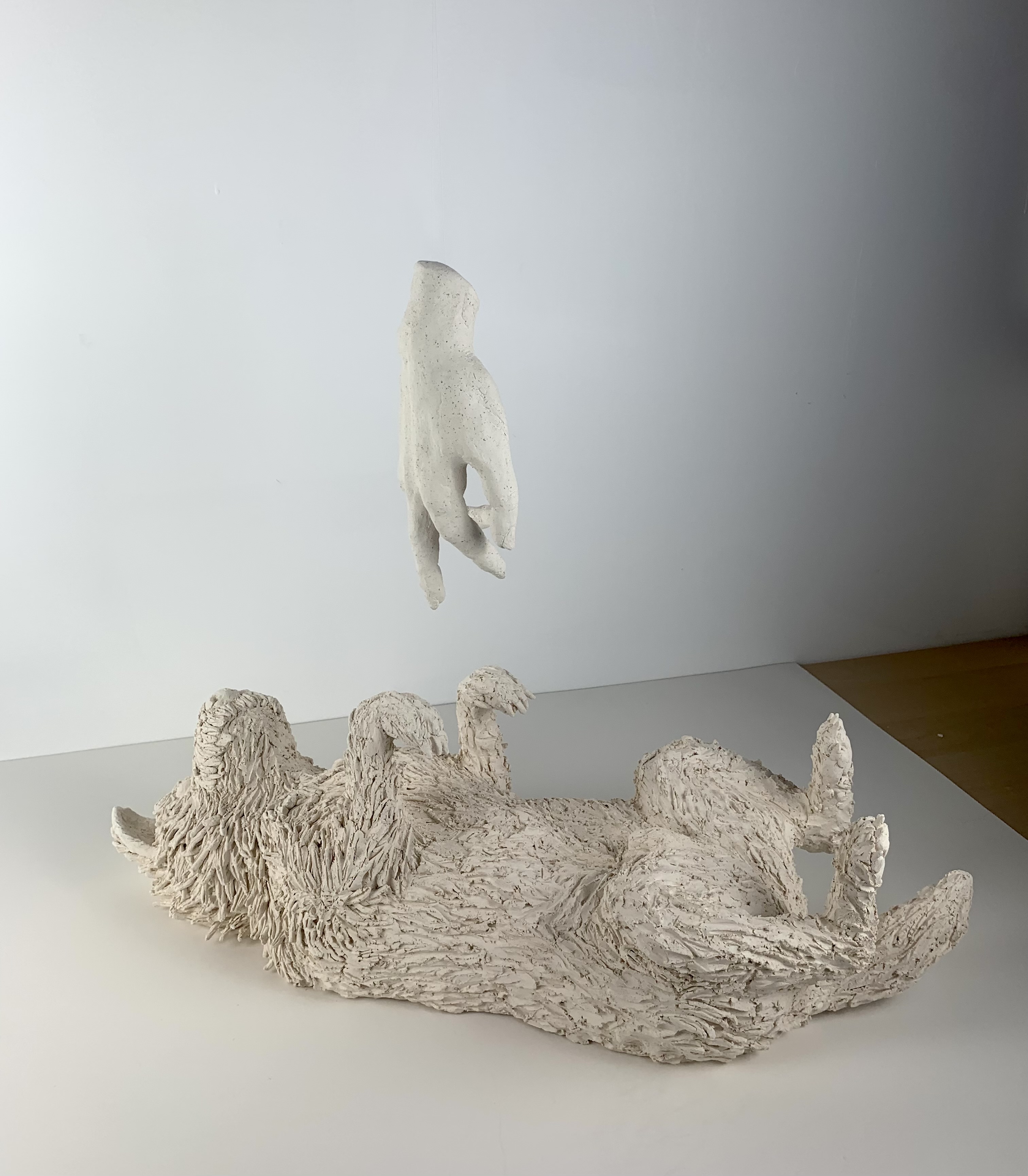
ceramic
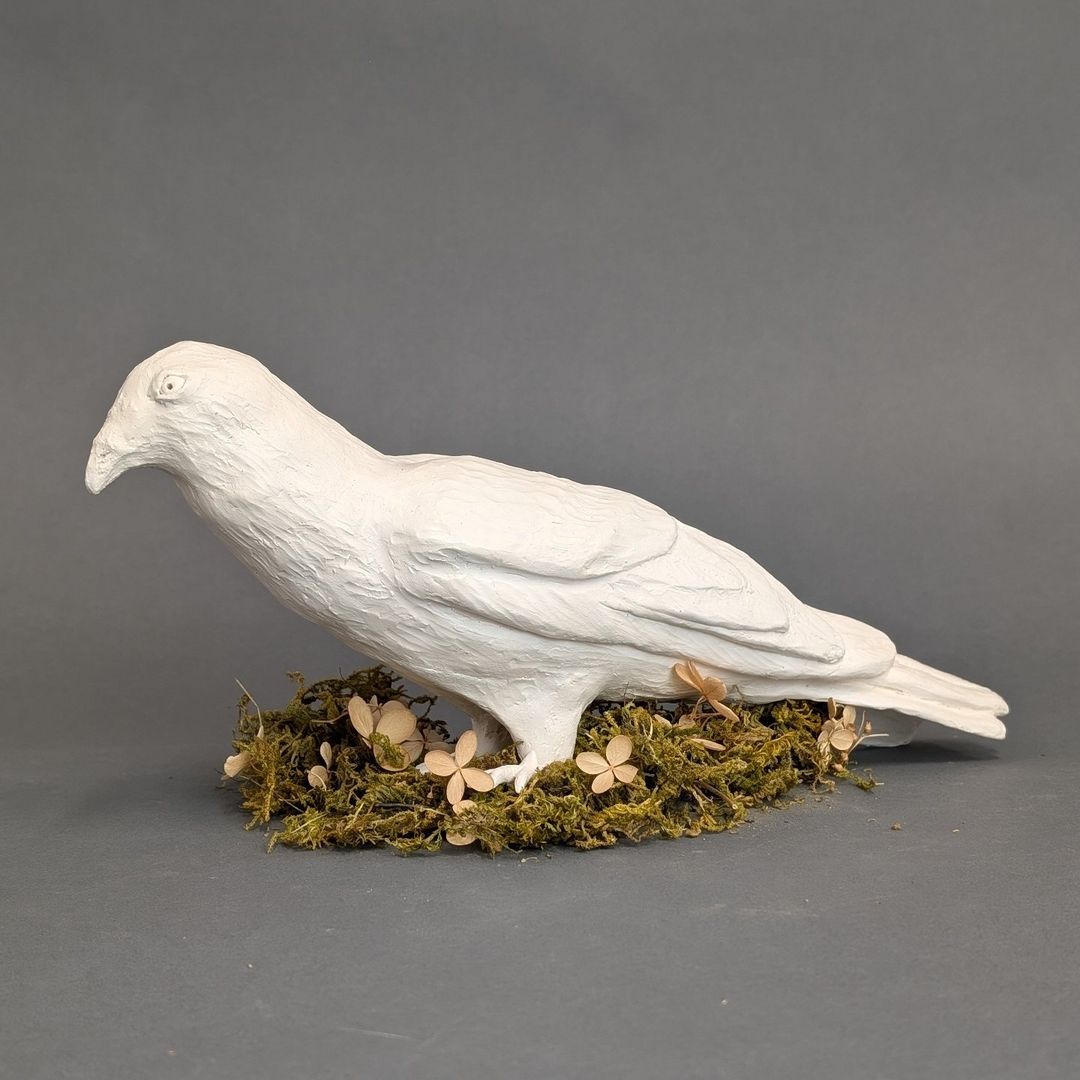
ceramic, moss, hydrangea flowers
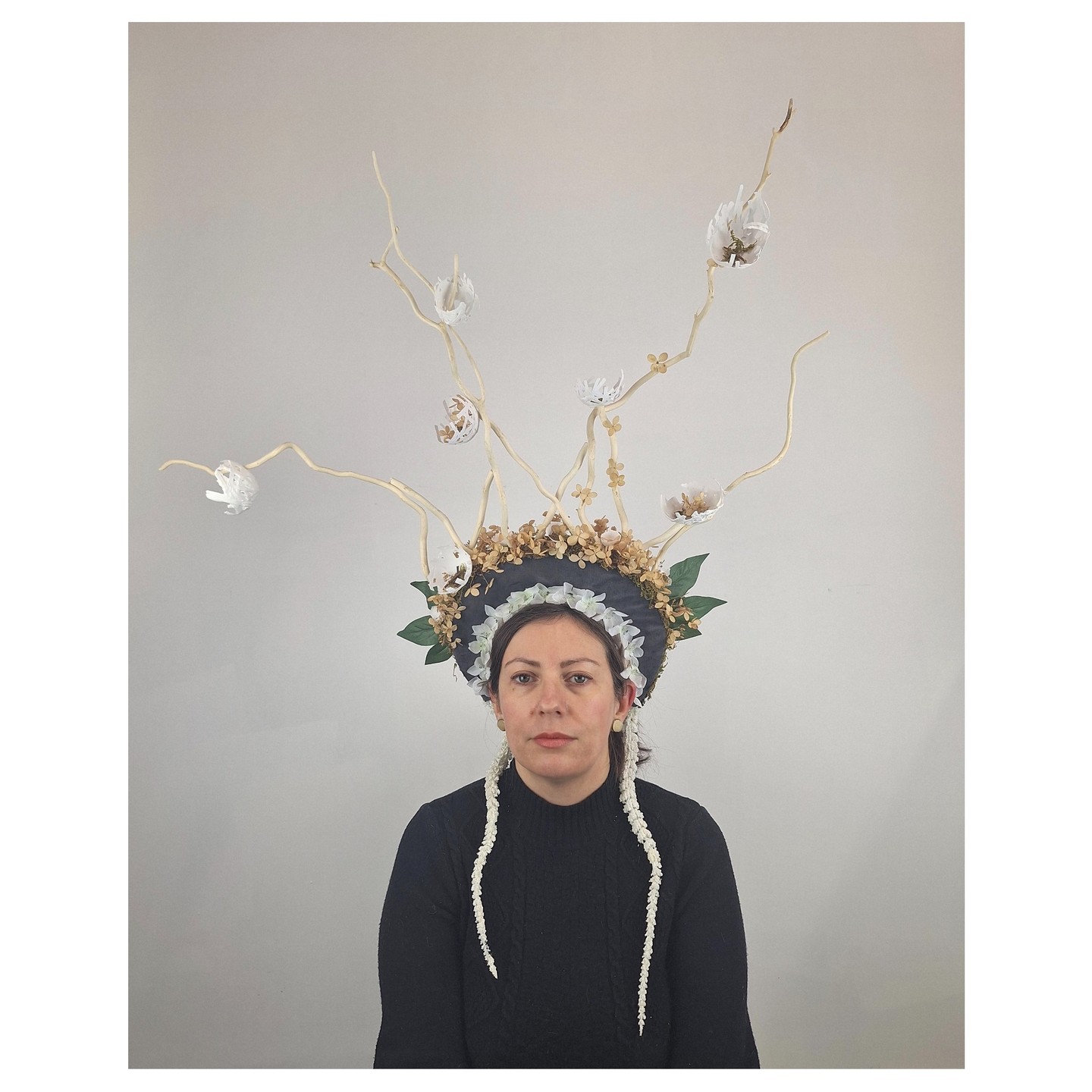
silk and real flowers, velvet, blanched wood, plaster and paper “nests”
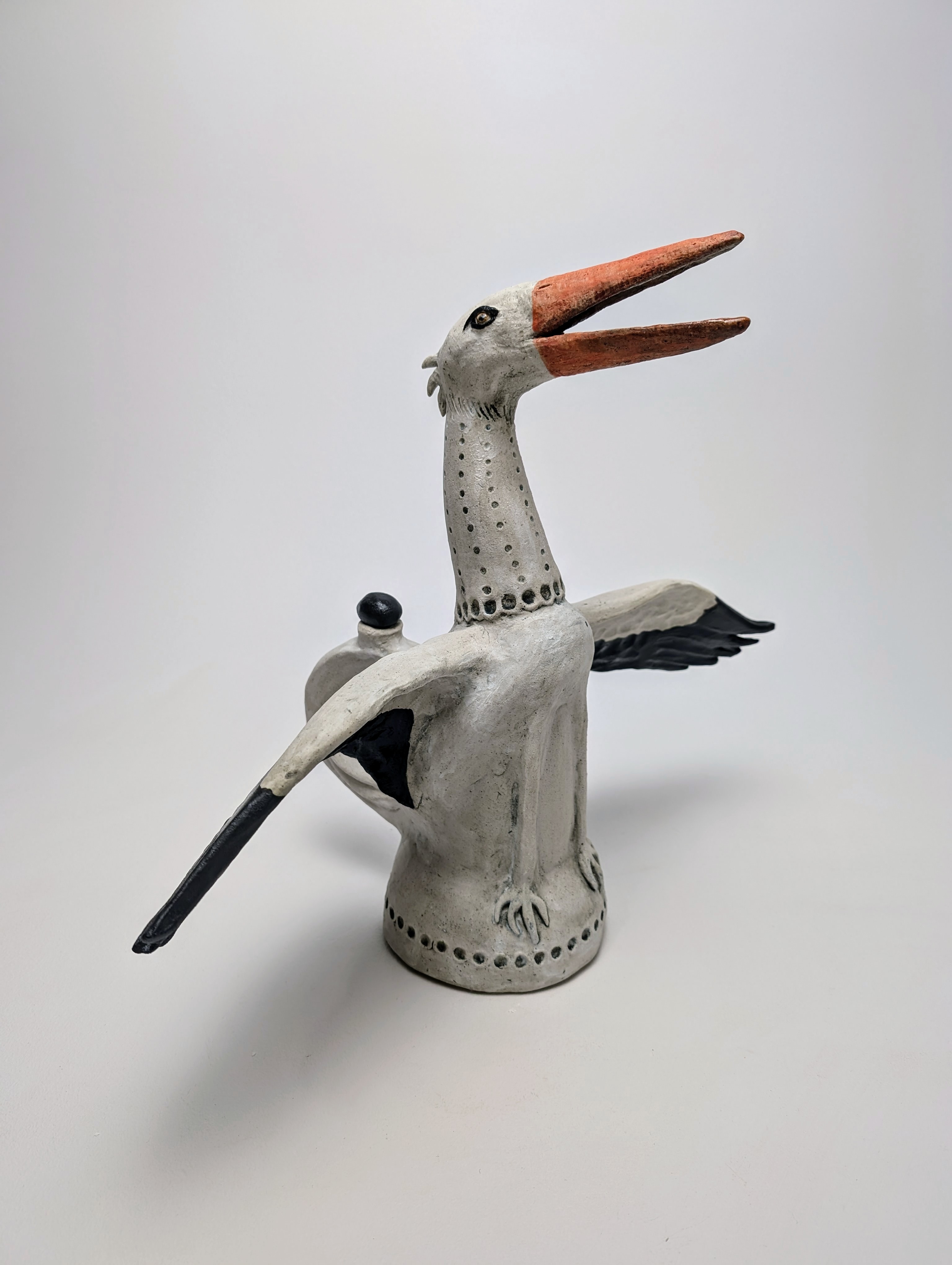
The White Stork Jug pays homage to the majolica rooster jugs of Ukraine, which became famed after the Full-Scale Russian Invasion of Ukraine when one survived a bombing of a home in the Boridianka rural settlement area. The white stork was chosen as an animal representing the complex realities of the war, resettlement and migration, and transcendence and survival. A meaningful encounter with a white stork is recounted in a poetic work by Kateryna Rudenko, Ukrainian refugee and scholar when she was considering war, liminality, and connection to place and the natural environment. In her writing, the stork is a symbol of the land and what was left behind when needing to flee Ukraine to Poland, eventually resettling in Canada. Rudenko describes her encounter with a white stork as, “Despite noticing me with its black, elongated eyes, it did not fly away but moved a little farther with each step I took. When I got too close, it slowly flapped its massive wings and, with great force, lifted its body into the air. A feather, as long as my forearm, drifted down slowly, and I caught it. I kept it for years, but when war forced me to flee, it became one of those impractical things I could not take with me.” The White Stork Jug is stylized in a similar folk art style as the rooster jugs. The wings are open to represent strength of not only the Ukrainian people, but also the more-than-human world who is bearing witness to and enduring the assault.
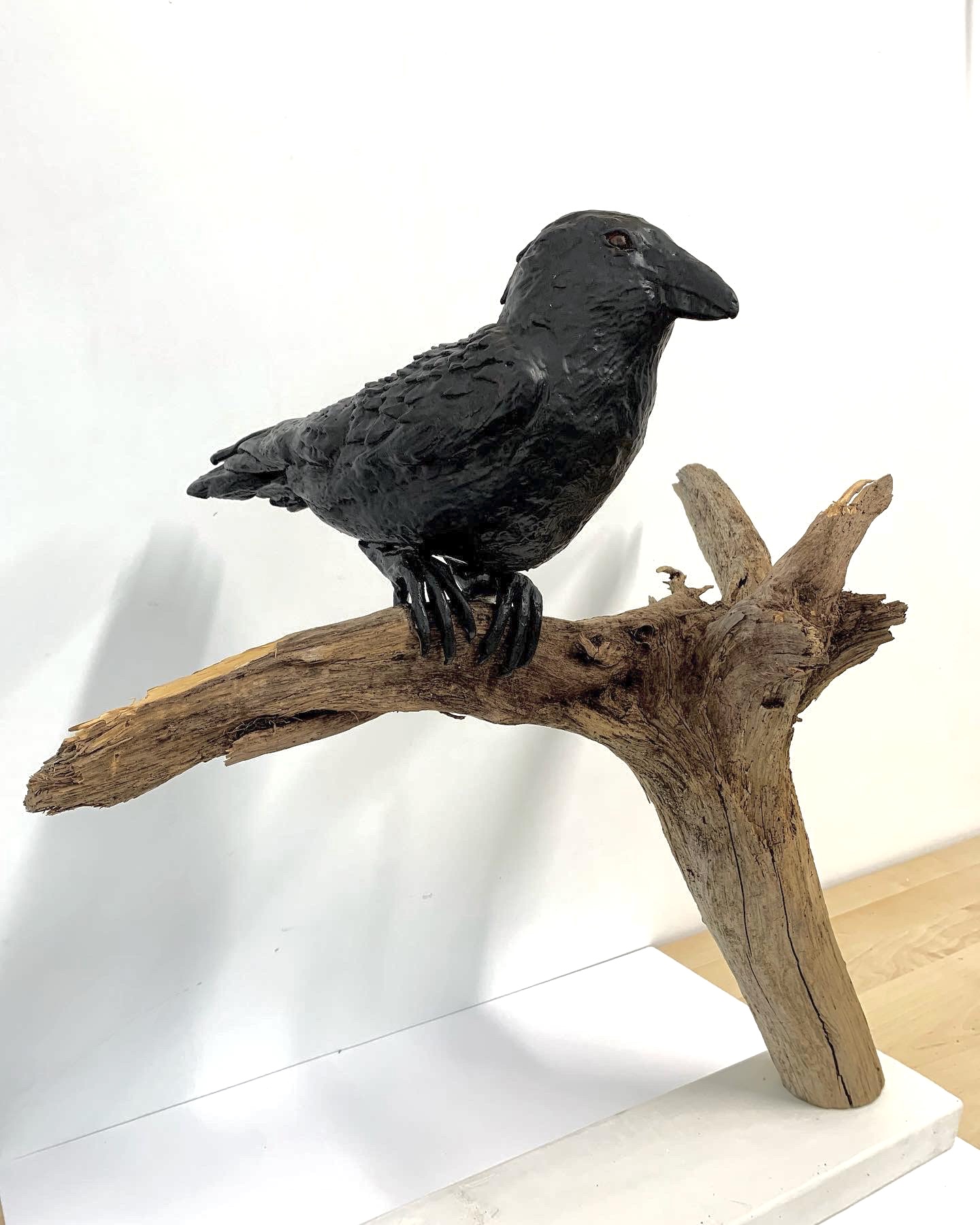
wax encaustic covered ceramic, branch, wood base
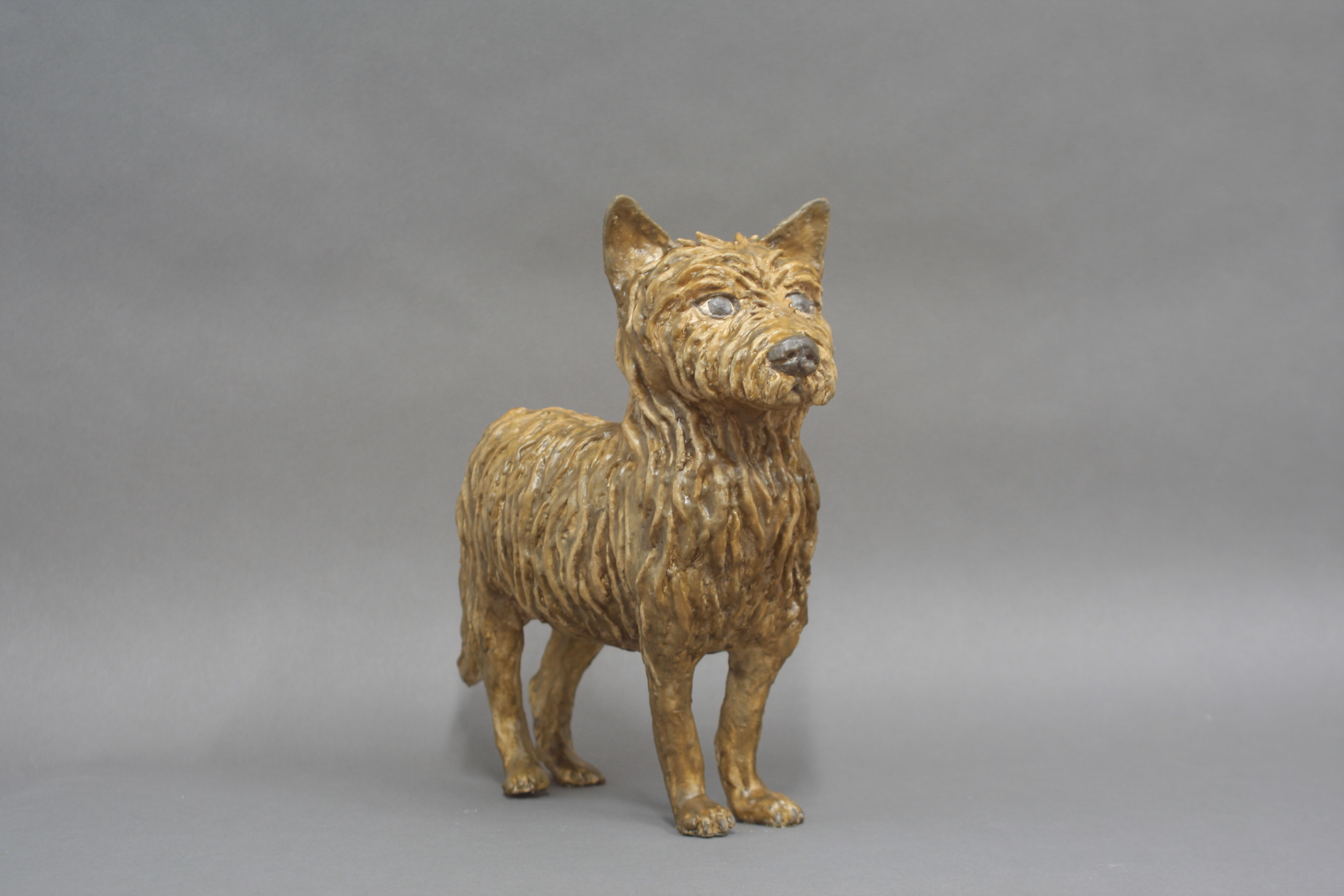
wax encaustic covered ceramic
 Melanie Zurba